
- Conservation
Explore our birding-specific websites:
- Education
- Policy
- Lands
- Centers and EventsCentersEvents
- About Us

Pollinators have evolved alongside flowering plants for millions of years, forming a symbiotic relationship essential to life on Earth. Insects, birds, and other pollinators help thousands of plant species reproduce, sustaining both people and wildlife by providing food, medicines, shelter, oxygen, and more. Without pollinators, ecosystems would collapse.
Unfortunately, pollinator populations are declining due to habitat loss, pesticide misuse, and climate change. At NH Audubon, we’re committed to protecting these essential creatures. By creating and preserving spaces where pollinators can thrive, we’re working toward a healthier, more vibrant future. Join us in taking action—learn, garden, and advocate for pollinators today!
Select any of the sections below to expand for pollinator information, links, and resources:
Pollinators are key to plant reproduction, which yields the fruits, vegetables, flowers, and seeds that sustain our diets. Some pollinators are generalists, transferring pollen among many plant species, while others are specialists, relying on specific plants—and vice versa. These specialized relationships are fragile, especially in small geographic areas. That’s why native plants are crucial to New Hampshire’s ecosystems.
New Hampshire is home to over 200 species of bees, 130 species of butterflies, thousands of other pollinating insects, and the beloved ruby-throated hummingbird. By supporting native plants, we help sustain the entire food web that depends on these pollinator interactions.
We’re working across New Hampshire to conserve pollinator-friendly habitats through:
Every effort brings us closer to a future where pollinators thrive!
Creating pollinator-friendly spaces is easier than you might think. Small changes can have a big impact on pollinators’ survival and ecosystem health.
Pollinator meadow restoration: Visit the one-acre demonstration pollinator meadow at our Concord headquarters. This site serves as a hands-on learning space for participatory scientists and conservationists.
Demonstration gardens: Explore our pollinator gardens at McLane (Concord) and Massabesic (Auburn) centers to gain inspiration for your own backyard habitat.
Pocket pollinator gardens: We’re leading efforts to install pocket pollinator gardens in urban spaces throughout Manchester. Look for our logo in community green spaces!
Workshops and webinars: Learn from experts about pollinators, gardening, and backyard habitat conservation. Check out our YouTube channel for free webinars; see the playlists: webinars and pollinator series.
Pollinator Fest & Native Plant Sale: Join us for this annual event and take home native plants and start your own pollinator garden. Visit the webpage to learn more.
Holiday wreath workshops: Learn to create beautiful, sustainably harvested wreaths. Attend a workshop to learn how to grow plants to create your own masterpiece. Keep an eye on the event calendar for listings in late fall.
Participatory science and volunteering: Help monitor pollinators through projects like the NH Butterfly Monitoring Network and the Beecology Project. Join us as a volunteer gardener or data collector. Science can be as simple as taking photos and sharing observations. Visit our volunteer page to see current opportunities.
View our full Event Calendar for upcoming workshops, webinars, and garden events throughout the state.
Over the years, we’ve received generous support from the US Fish and Wildlife Service (New England Field Office), Robin Colson Memorial Foundation, Gertrude Couch Trust, Benjamin Couch Trust, Patricia and Charles Walker Family Fund, … and many dedicated volunteers!
Our gratitude to the many volunteers and donors who support the gardens at the Massabesic Center, with special thanks to UNH Extension, NH Master Gardener Alumni Association, Massabesic Garden Club, Martha Israel, and the friends and family of Cathy Small.
By making pollinators a priority in our communities, we ensure a healthier future for wildlife and people alike.
Thank you for supporting New Hampshire Audubon’s pollinator conservation efforts!
Explore this virtual tour of the McLane Center Pollinator Garden in Concord, New Hampshire. See how we include native plants to attract pollinators, where to plant them, and which species to consider adding to your gardens.
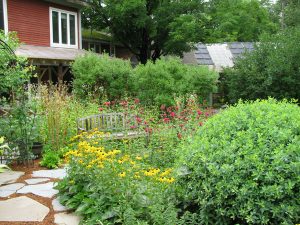
Made when the garden was in its infancy, here’s a look at the garden in full bloom in 2024:
Gardening for Wildlife: How our spaces can become important habitat, by Diane De Luca (UNH “Taking Action for Wildlife”)
Photos, from the top: Bumblebee on Purple Cone Flower by Diane De Luca, Monarch Butterfly on Common Milkweed by Walter Keane.